August Update
Road-testing the risk matrix, a new libel insurance option for newsrooms, welcoming Kate Parkinson, and the threat of media capture.
New Resources
In July, we released two new Press Freedom Briefings, both targeting newsroom managers and supporting vulnerable journalists.
The first briefing is from Yemile Bucay and is entitled Immigration Enforcement and Journalist Safety: What Newsroom Leaders Need to Know. This is a comprehensive document that provides essential information about threats to immigrant journalists in the US, along with resources and mitigation strategies. Ethnic and community media are most directly impacted, but this is an issue of concern for newsrooms everywhere.
The second Press Freedom Briefing is entitled Safety and Security for Trans, Nonbinary, and Gender-expansive Journalists: A Guide for Newsroom Leaders. It was drafted by the Trans Journalists Association. This briefing is also full of practical guidance for news managers and it does something crucial, which is to frame the challenges that trans journalists are facing as press freedom issues.
The goal of the Press Freedom Briefing series, launched in April, is to fill gaps in knowledge and understanding through independent research. Previous Press Freedom Briefings covered board engagement for non-profit media and safety protocols for low resourced newsrooms. You can find them all here. Please feel free to adapt these resources to meet your needs and to circulate as you see fit in your network.
New Events
This fall we are organizing a series of public discussions at the Newmark School to dig deeper into our findings. Yemile Bucay will moderate a panel discussion on threats to immigrant journalists and Gina Chua will anchor a discussion on safety for trans journalists.
A third session in the Journalism Protection Series will ask whether the US remains a safe haven for journalists under threat around the world. It will feature several of the Knight Press Freedom Fellows. Stay tuned for further details.
Risk Matrix Road Test
One of the key resources that the JPI has developed is our Risk Assessment Toolkit. The toolkit came out of our Safety Summit in January 2025 when we gathered at the Newmark J-School to consider, classify, and categorize the key risks that journalists and news organizations were likely to face in the second Trump administration.
One takeaway: many smaller news organizations are overwhelmed both by the range of new threats and the array of available resources. The risk matrix can help news organizations identify the threats that are most consequential and most likely to occur so that they can more effectively prioritize resources.
With support from the Jonathan Logan Family Foundation, we were able to test out our risk assessment toolkit with some of their grant partners. The JPI team – Mike Christie, who developed the risk matrix; Yemile Bucay; and myself – visited six newsrooms, from The Marshall Project to Mississippi Today. In each instance we spent several hours using the risk matrix to classify the risks. Then, after a break, we turned to the mitigations outlined in the risk assessment document.
When we asked for feedback we were told consistently that facilitation was critical. This was instructive, and we are considering ways to scale up our support, perhaps through the development of a peer-to-peer network.
New Libel Insurance Option for Newsrooms
We also continue to update the list of resources and mitigations. One key development is the availability of a new program of libel insurance, provided by Axis, a leading insurer. This new insurance is the brainchild of former ProPublica President Dick Tofel, with the help of EPIC insurance brokers, as described in his recent Substack, Second Rough Draft. It’s an important development in the insurance market, which may be extremely useful for smaller news organizations facing an increased risk of legal action. For more information, write to EPICNews@epicbrokers.com.
Welcoming Kate Parkinson
We are excited to announce that Kate Parkinson will be joining the JPI as the Risk and Safety Manager starting on September 22.
Kate spent more than a decade as a conflict reporter, working in Syria, Iraq, Ukraine and the Central African Republic. In 2011, she was reporting on the civil war in Libya when her cameraman and husband, Olivier Sarbil, was hit by a rocket propelled grenade. After that experience, Kate became a leading advocate for journalism safety. She has worked in a variety of roles, most recently for the AP. Kate is also the founder of a startup called Head Set that trained journalists using virtual reality.
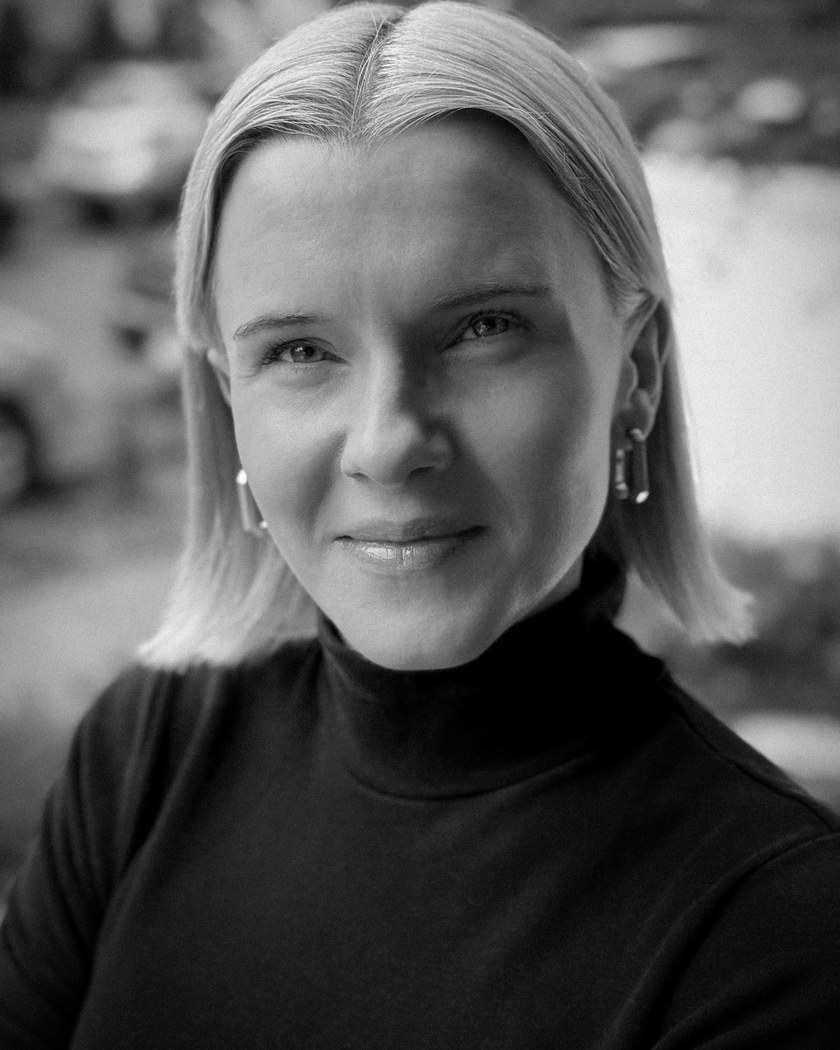
In her JPI position, Kate will help lead our safety-related research, organize events, and help manage various projects, including the Knight Press Freedom Fellowship Program. She will also directly support the Newmark J-School faculty and students, organizing training sessions, providing individual support, and helping our efforts to bring safety into the Newmark School curriculum.
We are so excited to welcome Kate, but it also means we have to say goodbye to the aforementioned Yemile Bucay. Yemile has taken on an exciting new role at Reuters, heading up editorial safety for the Americas. We are glad that Yemile will remain involved in the JPI and the Newmark J-School and wish her all the best.
Media Capture
In my most recent column for CJR, I looked at the phenomenon of media capture, in which governments exercise control not via repression, but through collusion, corruption, and regulation. Scholars, researchers, and press freedom advocates have long documented the phenomenon in places like Turkey, Hungary, Mexico and Kenya. Now, they warn, it has come to the US.
In June, I revealed in CJR a secret program to broadcast televised VOA and RFA content directly into North Korea. The program took a decade of intensive negotiation to put in place, and was disbanded when funding for VOA and RFA was cut. It’s not clear if those who made the decisions – Elon Musk and Kari Lake – were even aware of the secret program’s existence.