June Update
Getting started with JESS, safety training for documentary filmmakers, honoring Mohammed Mhawish, and whether the dictator interview is a lost art.
Have You Tried JESS?
Last month the JPI in partnership with the ACOS Alliance launched JESS, our AI-driven safety tool. Our goal is to democratize safety information by making it available to every journalist and news organization across the country. Since the launch we’ve done demos with journalists and news organizations and have been really pleased by the response. Over the next several weeks, ACOS will be leading testing on the safety planning feature, which allows users to detailed and customized reports. Our aim is to make JESS as useful and usable as possible.
If you haven’t tried JESS, please give it a whirl. You can sign up at safety www.safetyjess.ai. We’ve also produced a series of short videos to guide you through the process and answer your basic questions.
JESS is ready to use and standing by to help you plan your next assignment. But we are also actively soliciting feedback from users who can help us expand JESS’s knowledge base and improve its functionality. One of JESS’s key features is that it’s secure and private, unlike most AI products. This is great for your security but it means we know nothing about the user experience unless we hear from you. So please reach out with your feedback, comments, and suggestions. If you’re interested in being a tester, this requires a bit more of a time commitment, but we would welcome your input. If you or your team would like to arrange a demo, we’d also be happy to provide it.
Safety Training for Documentary Filmmakers
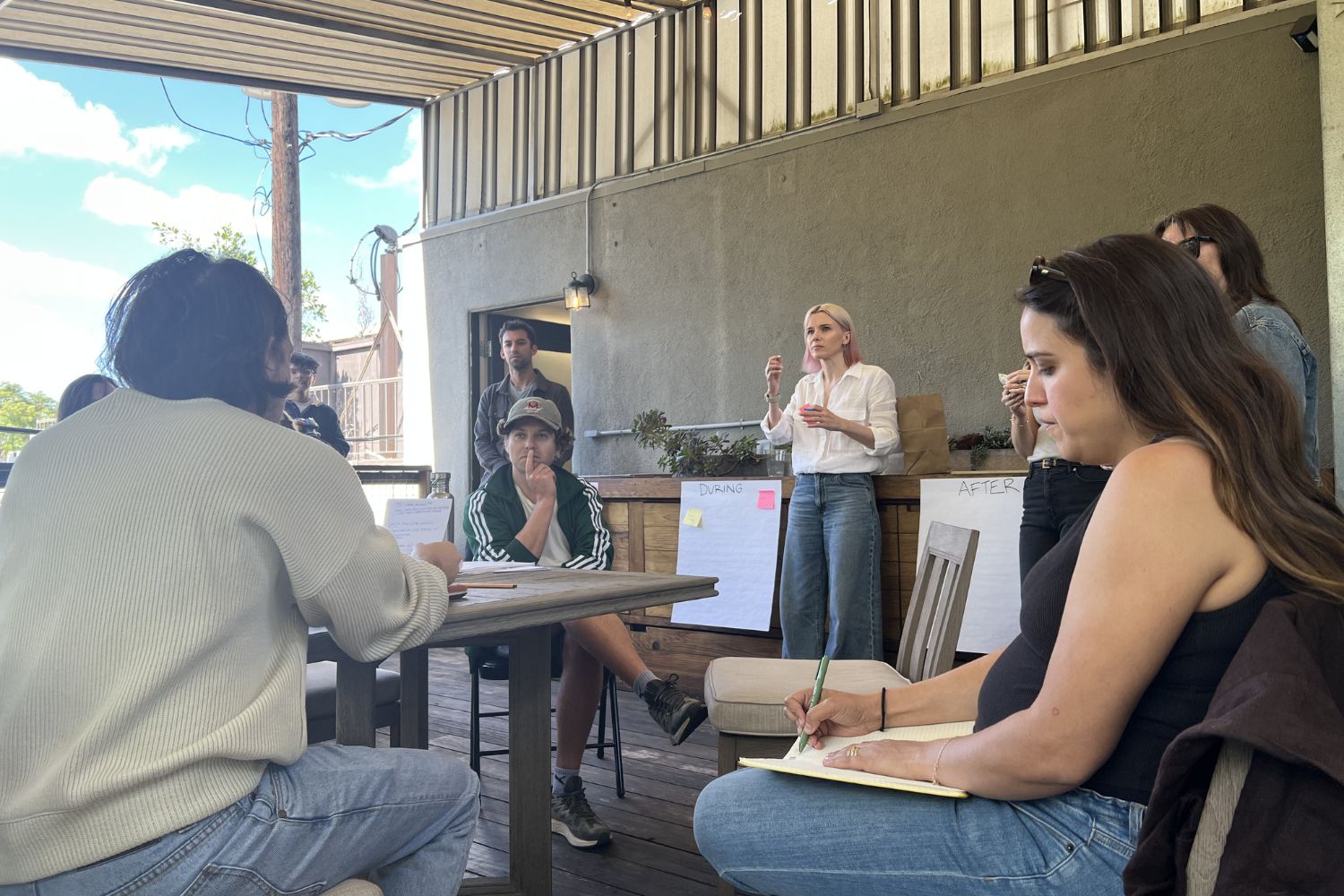
Last month Kate was in Los Angeles to lead a full-day safety training for the International Documentary Association, as part of our ongoing partnership with the IDA. The session brought together 20 documentary filmmakers to work through the risks specific to long-form, independent nonfiction work, from hostile environments and surveillance to legal exposure and the strain of sustained projects. The day was built around JPI's safety planning framework, adapted for filmmakers. You can find the template here, and we hope you'll share it with anyone in your documentary network who might find it useful.
We are grateful to the Golden Globes Foundation for hosting the training, and to our colleagues from the Reporters Committee for Freedom of the Press, the Global Center for Journalism and Trauma, and the Freedom of the Press Foundation, who brought their expertise to the day.
Honoring Mohammed Mhawish
Congratulations to our Knight Press Freedom Fellow, Mohammed Mhawish, who was named a finalist for this year's Livingston Awards, which honor the best journalists under 35. The recognition was for "Watched, Tracked, and Targeted," his New York magazine investigation into Israel's surveillance regime in Gaza. His latest piece for the magazine examines Trump's "Board of Peace" and what it means for Gaza's future. You can read it here.
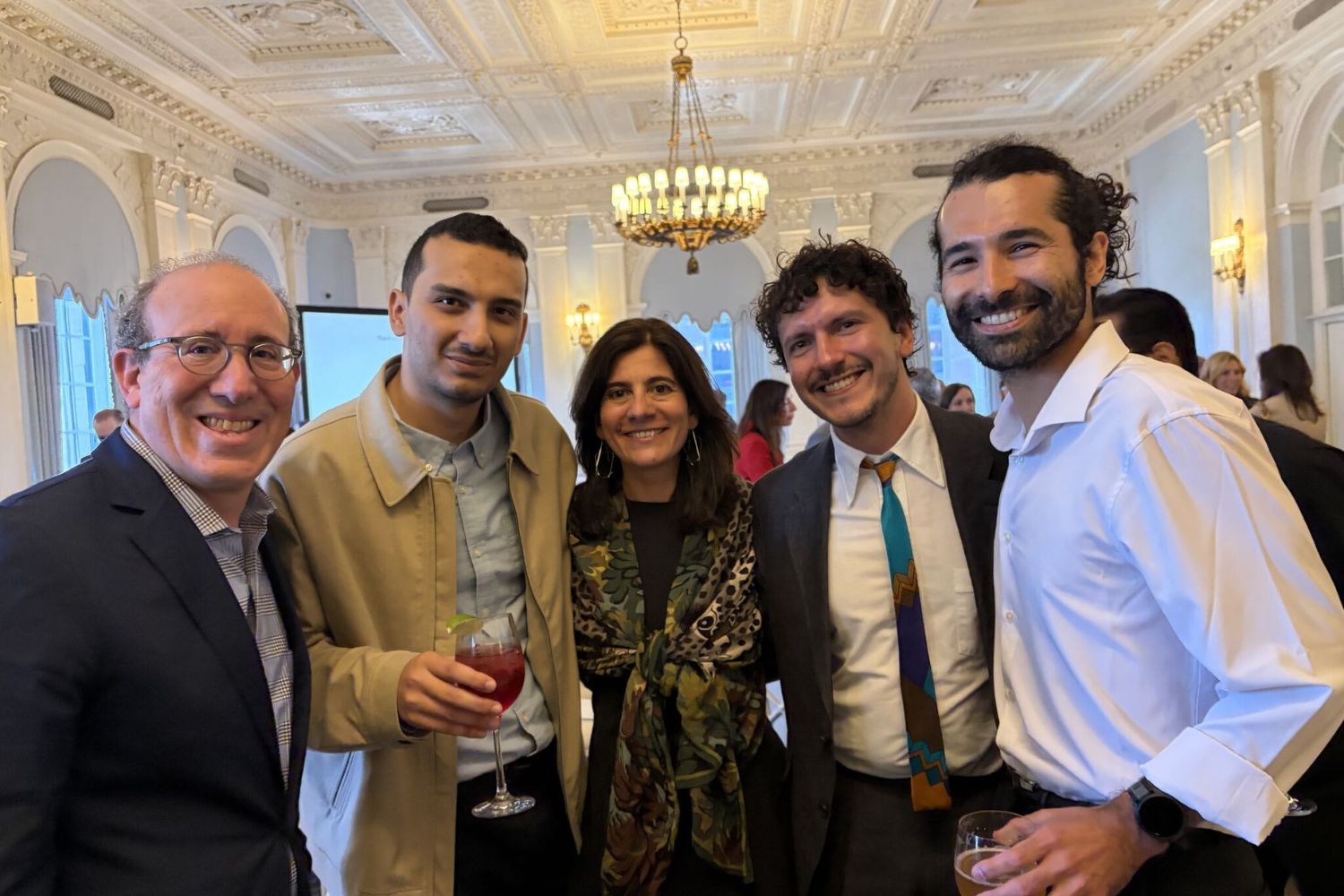
From left: me, Mohammed Mhawish, Newmark Dean Graciela Mochkofsky and alumni Gerardo del Valle and Carlos Garcia. Carlos was also a finalist and Gerardo won in the International Reporting category.
Is the Dictator Interview a Lost Art?
I wrote about the origins and evolution and the dictator interview for CJR’s Access Issue. How do journalists retain independence when access depends on the good graces of a tyrant? I spoke with some of the best – Christiane Amanpour, Jon Lee Anderson, Jorge Ramos, and Dan Rather, who interviewed Saddam Hussein in 2003, on the cusp of the Iraq invasion. I also spoke with Elizabeth Becker who as a Washington Post correspondent interviewed the Cambodian dictator Pol Pot. Even though a member of Becker's delegation was murdered allegedly by government security forces while she was in the country, Becker told me, “We need to be witnesses, those who have the opportunity to describe this however much we can.”
Read the full story here.